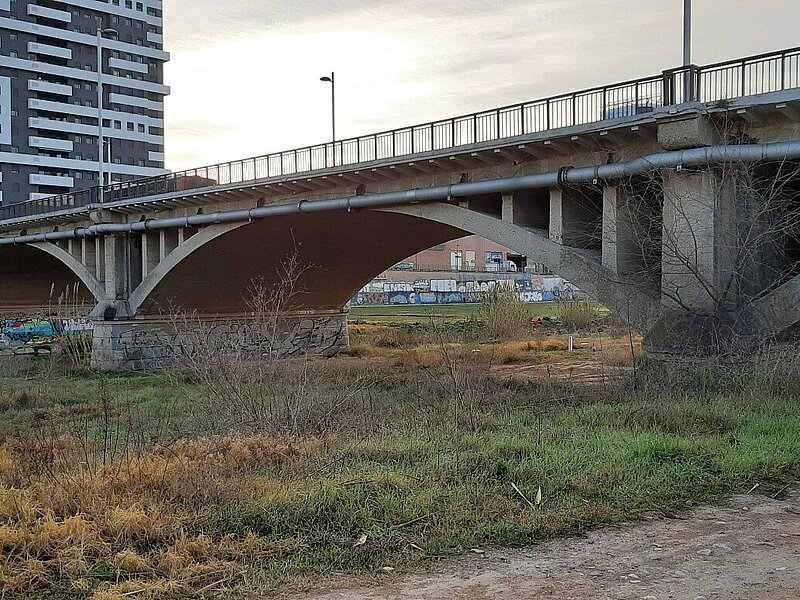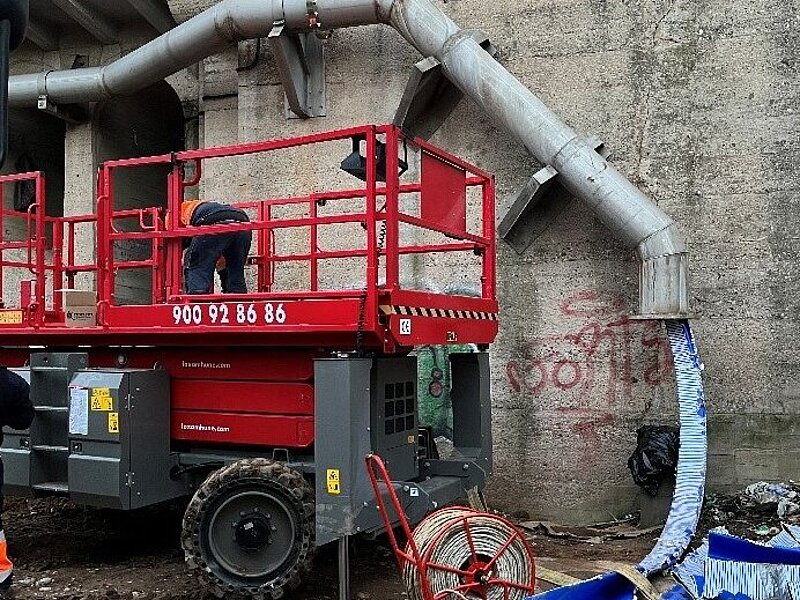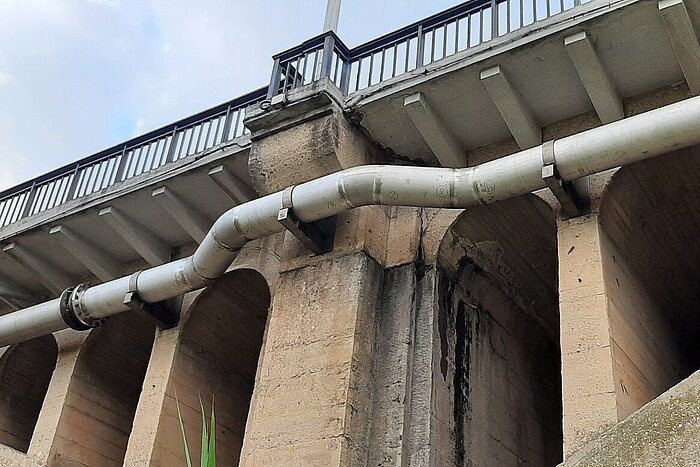
The main challenge lay in the combination of structural restrictions and the geometry of the pipeline. Conventional repair or replacement was not an option because work on the bridge itself was strictly prohibited. At the same time, the pipeline route included 16 consecutive 30-degree bends within the short 150-metre section, which created significant resistance and limited the applicability of conventional and even some trenchless rehabilitation methods. Since the pipeline was suspended rather than buried, installation forces also had to be carefully controlled to prevent excessive pulling forces from lifting or damaging the host pipe. The host pipe was made of steel, the operating pressure was 11 bar, and the rehabilitation work had to be carried out is such a way that no harmful loads were transferred to the existing structure.
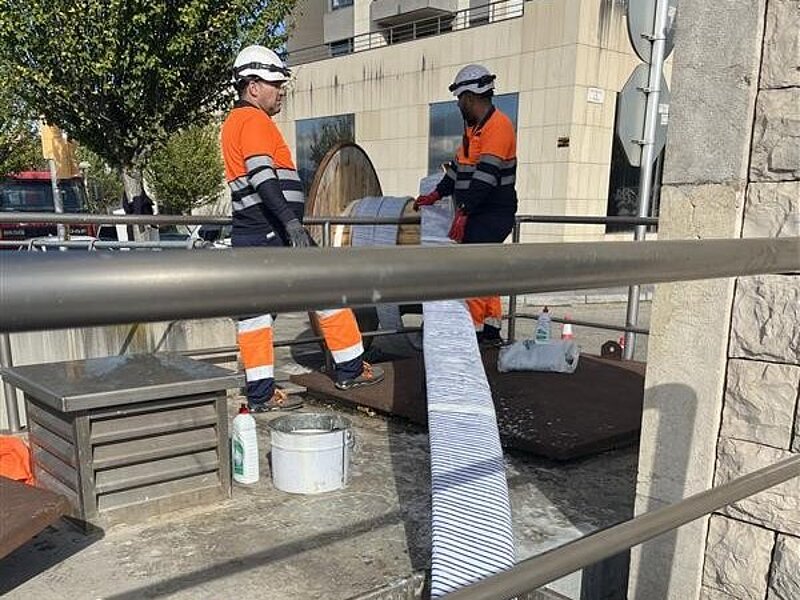
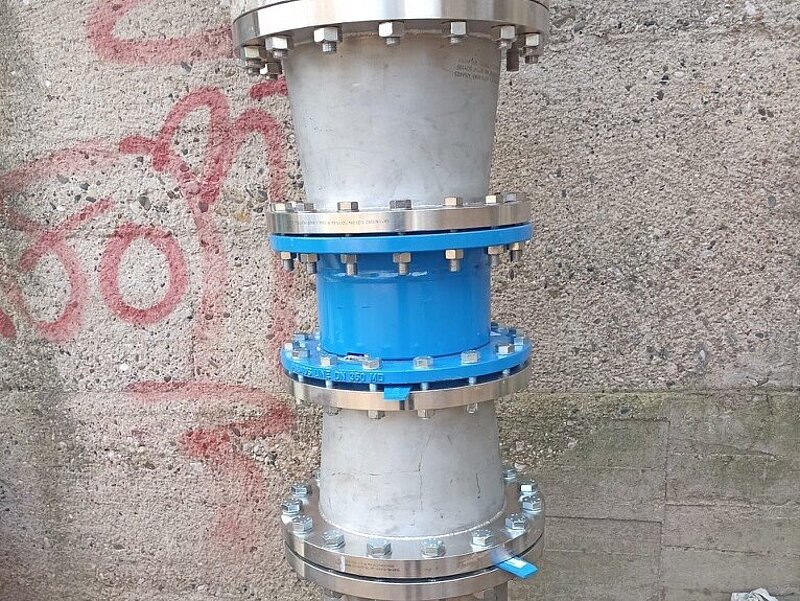
To address these conditions, the project employed the Primus Line® system. The aramid-reinforced Primus Liner provided the flexibility required to navigate all 16 consecutive 30-degree bends while meeting the required operating pressure. The scope of supply included the Primus Liner DN350 and the necessary flange connectors, as well as supervisory services. Once installed, the liner was re-rounded using compressed air to form a continuous pipe that can carry the operating pressure without transferring stress to the host pipe. This process renewed the pipeline while fully preserving the historic bridge.