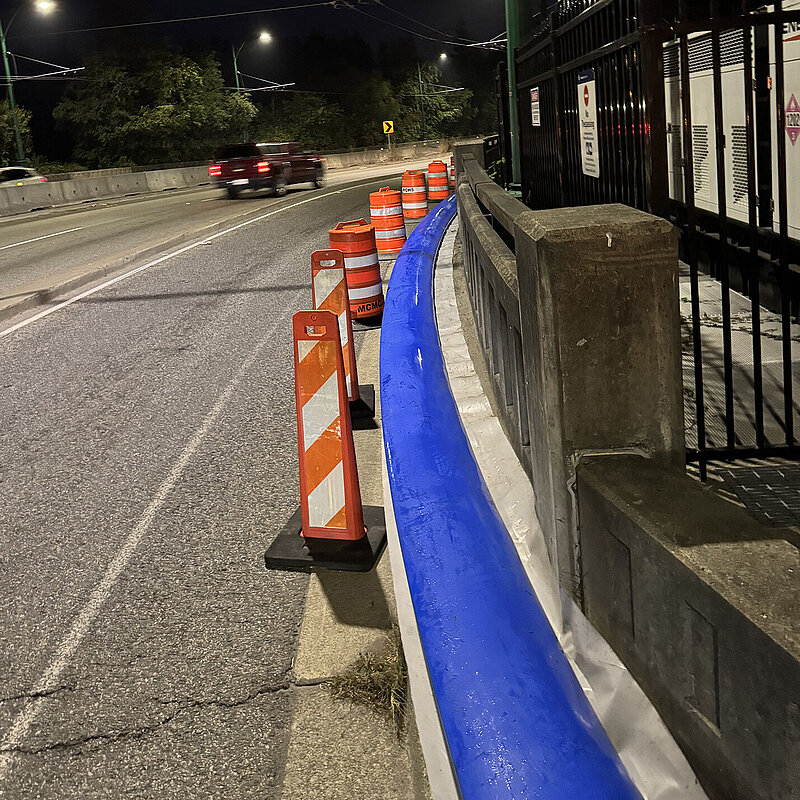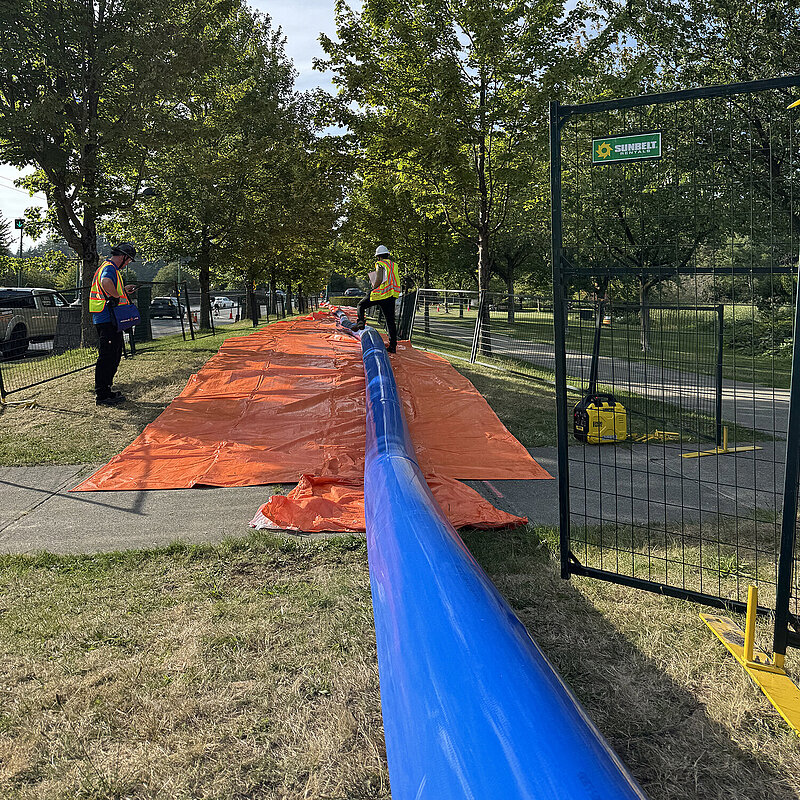
The bypass was designed for deployment for four to five months of the year during scheduled maintenance windows, but it had to be removed during the peak tourist season in order to preserve accessibility and the park’s natural appearance. In addition to environmental constraints, the operating pressure of 225 psi and the test pressure of 275 psi were beyond the capabilities of conventional temporary bypass systems that lack the structural strength and pressure-rating capacity to safely operate under these conditions, rendering them unsuitable for this application. Although the initial plan had assumed an operating pressure of 175 psi, on-site verification revealed an actual working pressure of 225 psi and a required test pressure of 275 psi.
An engineering assessment confirmed that the 16-inch Primus Line® medium-pressure system meets these requirements, with a maximum allowable operating pressure (MAOP) of 225.7 psi and a maximum allowable test pressure of 282.1 psi. The lightweight aramid-reinforced liner enables above-ground installation and can accommodate bends of up to 45 degrees with a minimum bend radius of 20 times the pipe diameter, as agreed during the planning stage.
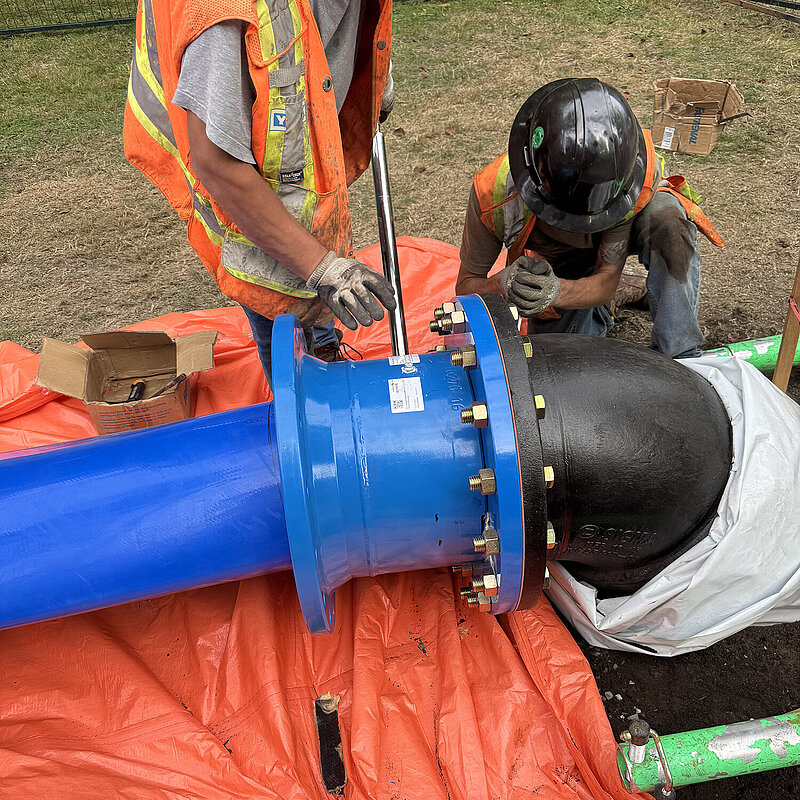
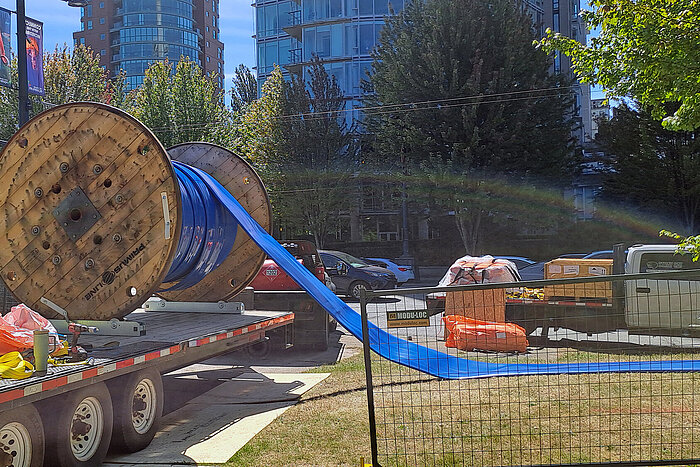
The solution comprised two unfolded Primus Line® liners, each measuring 365 m, which formed an approximately 650 m bypass across five sections. Ten Primus Line® R1 connectors were used to provide secure mechanical terminations and ensure leak-tight operation. The installation was carried out in August 2025.