Protecting heritage infrastructure: suspended water pipeline rehabilitated on a historic bridge

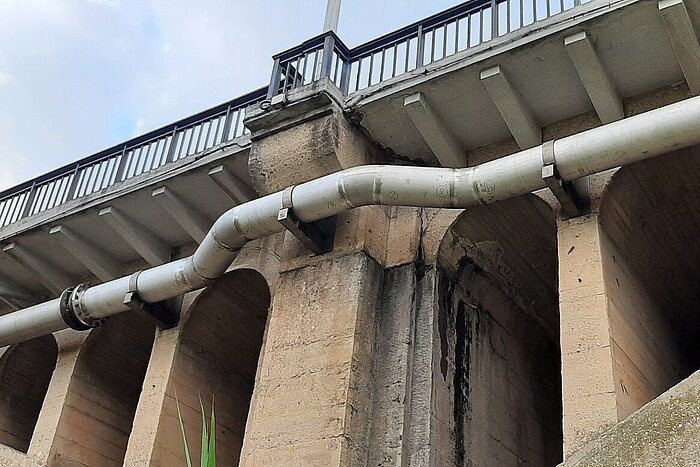
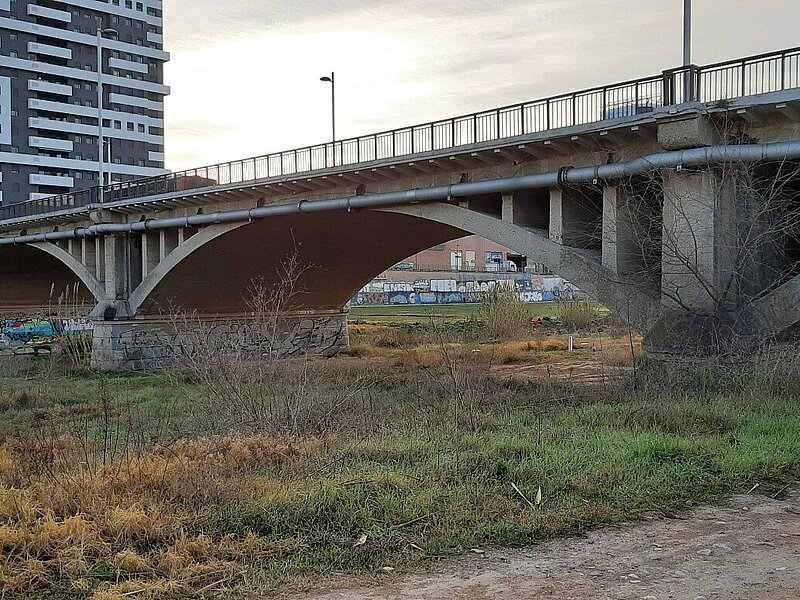
In 2025, a municipal utility in Tarragona, Spain, used Primus Line® Rehab to rehabilitate a leaking 16-inch steel pipeline carrying potable water beneath a protected historic bridge. The 493-foot section had become critical due to frequent leaks at multiple joints caused by poorly executed welding seams. As the bridge is heritage-protected, direct intervention affecting the original structure was prohibited. Therefore, the project required a non-invasive rehabilitation method that could restore operation while preserving the bridge and accommodating the existing suspended pipeline arrangement.

The main challenge lay in the combination of structural restrictions and the geometry of the pipeline. Conventional repair or replacement was not an option because work on the bridge itself was strictly prohibited. At the same time, the pipeline route included 16 consecutive 30-degree bends within the short 493-foot section, which created significant resistance and limited the applicability of conventional and even some trenchless rehabilitation methods. Since the pipeline was suspended rather than buried, installation forces also had to be carefully controlled to prevent excessive pulling forces from lifting or damaging the host pipe. The host pipe was made of steel, the operating pressure was 160 psi, and the rehabilitation work had to be carried out is such a way that no harmful loads were transferred to the existing structure.

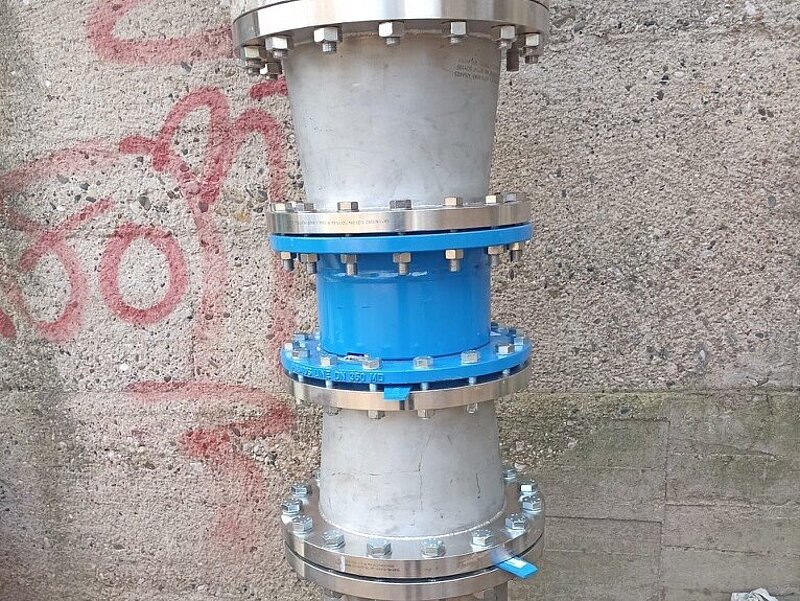
To address these conditions, the project employed the Primus Line® system. The aramid-reinforced Primus Liner provided the flexibility required to navigate all 16 consecutive 30-degree bends while meeting the required operating pressure. The scope of supply included the 14-inch Primus Liner and the necessary flange connectors, as well as supervisory services. Once installed, the liner was re-rounded using compressed air to form a continuous pipe that can carry the operating pressure without transferring stress to the host pipe. This process renewed the pipeline while fully preserving the historic bridge.
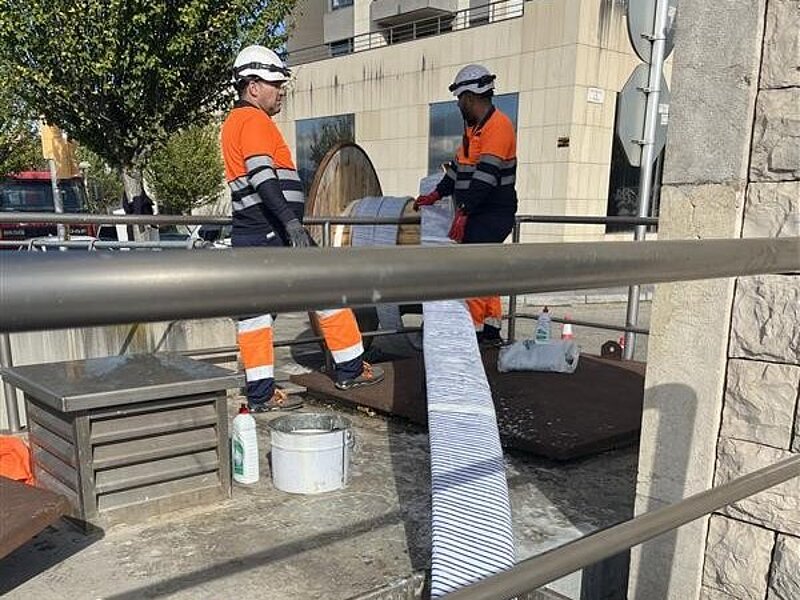
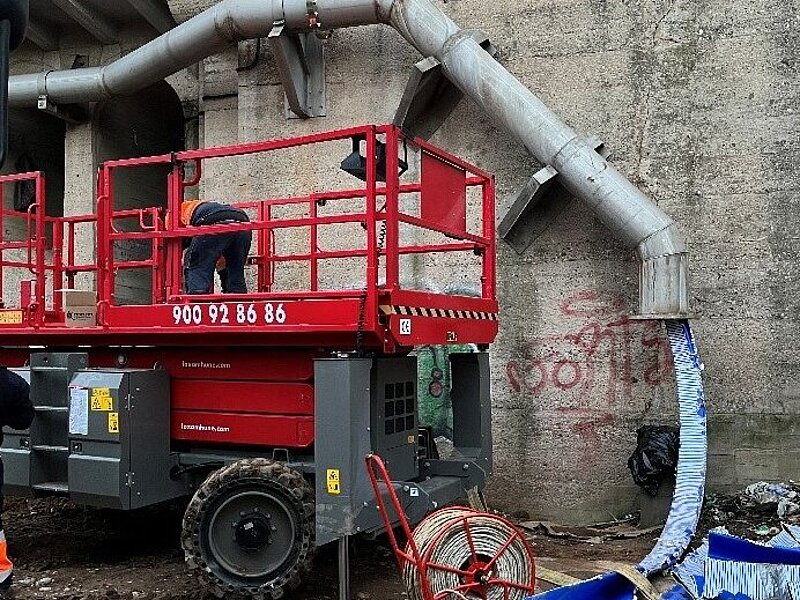
The installation was carried out by Rädlinger Primus Line’s installation partner AQUATEC Soluciones Medioambientales S.A.U. Preparatory work involved establishing access to and  clearing the inside of the host pipe. The team entered the pipeline via a chamber on the northern bank, where cleaning and inspection procedures were carried out to remove residues and confirm the absence of any obstructions. The U-shaped liner was then positioned on the northern bank and winched towards the southern bank. To allow passage, two vertical bends on the southern bank were temporarily removed and later reinstalled. Soap lubrication reduced the pulling force to approximately one tonne, thereby preventing the suspended host pipe from being lifted. After insertion, the liner was inflated and the connectors were installed. A second inflation to 72.5 psi then ensured full conformance through all bends.

The rehabilitation was completed in one section in three working days. Following a successful pressure test, the pipeline was returned to service. This involved renewing the leaking suspended potable water pipeline while respecting the constraints of a protected historic bridge and the demanding bend geometry of the line. This project demonstrates how Primus Line® Rehab can be used in areas where access is restricted, heritage protection is required, and controlled installation loads are essential.

Learn more on Primus Line® Rehab's fields of application

Stay up to date with Primus Line: Subscribe to our newsletter now!

* required

Information about sending newsletters with the provider CleverReach, evaluation, and your unsubscribe options can be found in our privacy policy.

Your product watchlist

Contact us now!

What challenge are you facing? Let us know how we can support you!

Enquire now!