
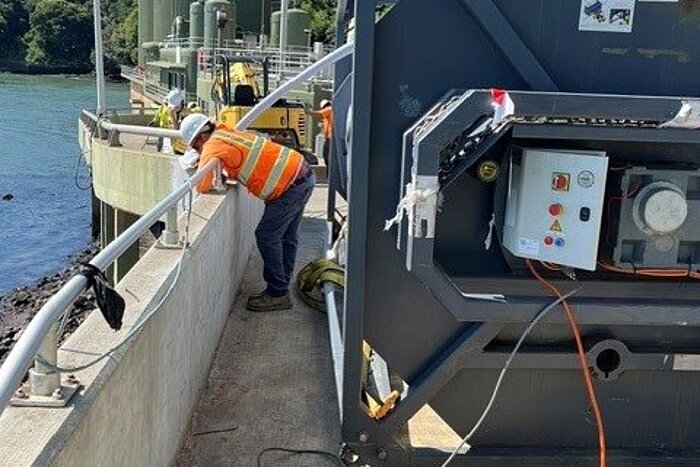
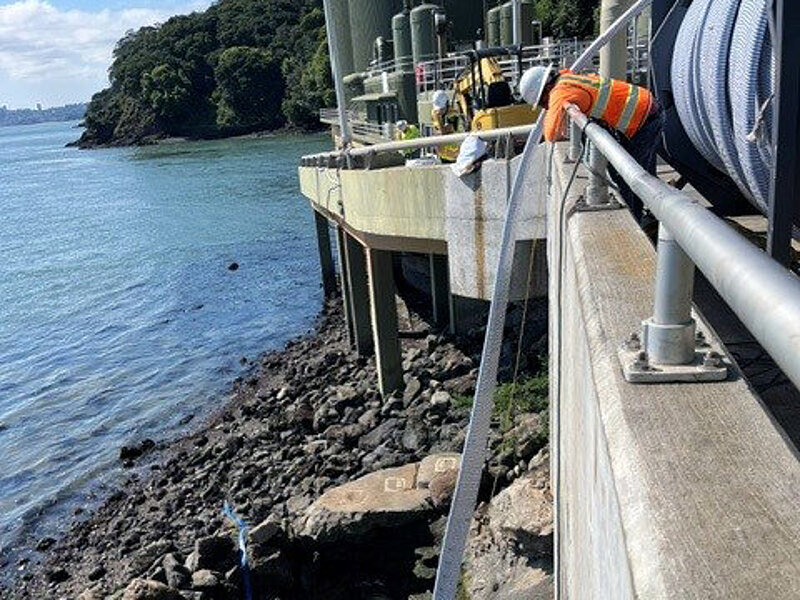
The rehabilitation section ran along the narrow shoreline alignment adjacent to the treatment facility. The existing treatment plant structures, retaining walls and rocky coastal terrain restricted the available space for positioning equipment, staging, and accessing pipelines. Conventional replacement would have required extensive shoreline excavation and greater intervention within the treatment plant area. Construction activities also had to be coordinated around low tide due to limited working windows. Additionally, the existing pipeline alignment included multiple bends and crossed multiple elevations within the coastal facility.
Karriere
The flexible 16-inch liner was installed inside the existing 20-inch ductile iron host pipe in one section. Although the diameter of the installed liner was reduced from 20 to 16 inches, the required hydraulic performance was not compromised thanks to the liner’s wall thickness of only 0.24 inches and its smooth internal surface. The wastewater pipeline operates at approximately 20 psi. The liner’s flexibility enabled it to follow the existing alignment, including the multiple bends, and the installation method required only localized access points.
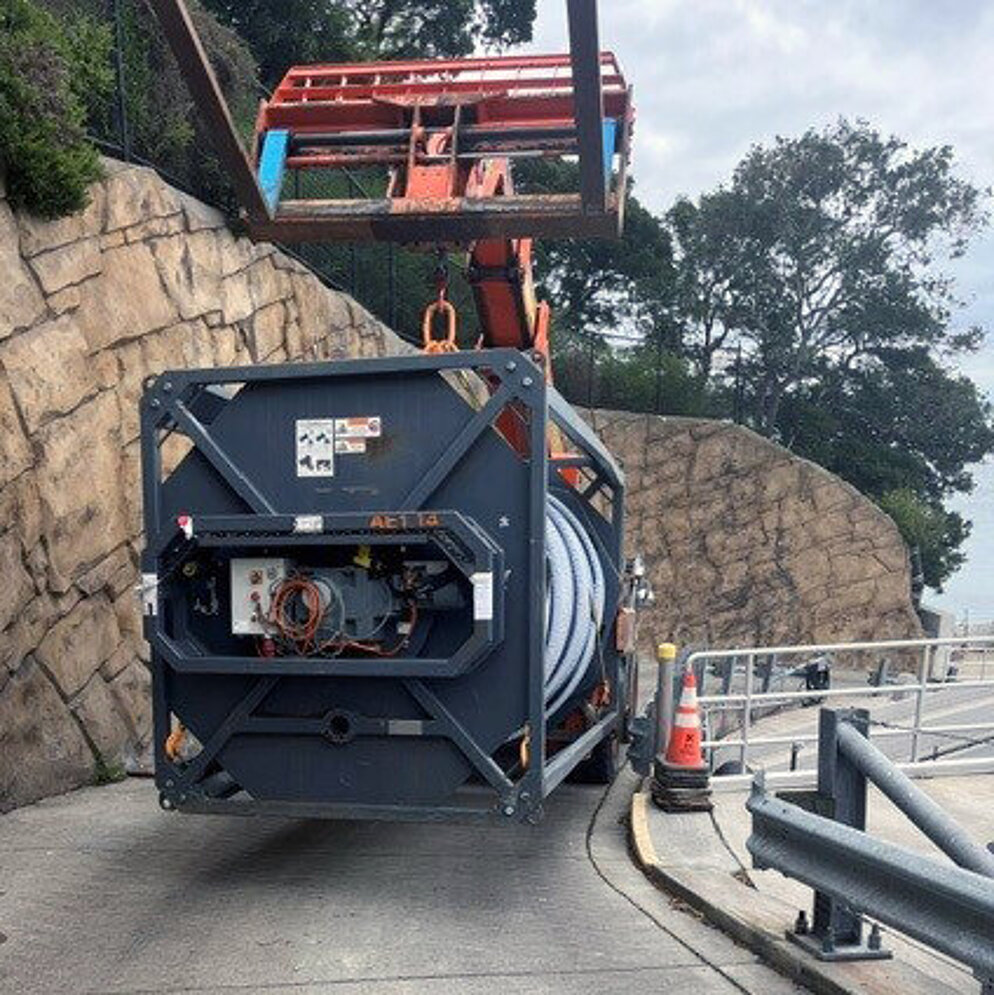
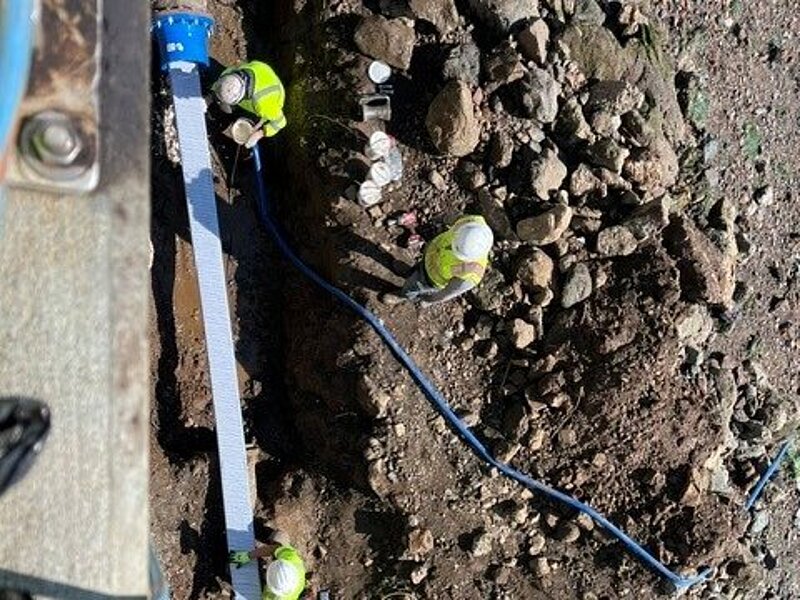
Access excavations were constructed at both ends of the rehabilitation section before installation. The liner reel and installation equipment were positioned on the elevated facility access road. Liner insertion and connector installation were performed through localized excavations in the rock-armored shoreline below. This setup eliminated the need for continuous excavation along the pipeline route and large staging areas.
Pre-folded in a U-shape, the liner was supplied on a compact transport reel. It was lifted into position with a knuckle-boom loader and aligned to create a direct feed path to the pipeline entry point. Before liner insertion, the force main was isolated, cleaned, and inspected. Then, the liner was pulled through the host pipe in one continuous installation. Personnel in the shoreline excavation guided the liner into the pipeline, while coordinating with the access road crew to maintain a controlled feed. The liner insertion process took approximately three hours.
After insertion, the connectors were installed, and the rehabilitated section was pressure tested before being returned to service. This rehabilitation project restored the long-term functionality of the sewer force main, minimized disturbance at the constrained site, and avoided the need for extensive excavation along the shoreline. Additionally, the rehabilitation extended the system's expected service life by at least 50 years.
Stay up to date with Primus Line: Subscribe to our newsletter now!
Information about sending newsletters with the provider CleverReach, evaluation, and your unsubscribe options can be found in our privacy policy.