
The Primus Line® technology had emerged on the German market in 2003. Its manufacturer, Rädlinger primus line GmbH from Bavaria, had originally designed the liner for high pressure gas pipeline rehabilitation. The first water applications followed in 2004. Just two years later, this new technology for the trenchless rehabilitation of pressure pipes entered the Italian market and went on to become a success story over the years.
Karriere
What benefits does the Primus Line® system offer?
The system itself consists of a liner and specially designed system connectors. Thanks to its three-layered structure of plastic inner and outer coatings with a Kevlar® fabric reinforcement layer, the liner is strong yet flexible.
From the outset, the advantages of this new relining method were its ability to be installed in long lengths of up to 2,500 metres in one piece and its bendability, enabling it to pass bends of up to 45 degrees (and meanwhile 90 degrees under specific conditions). Furthermore, due to its intentional loose-fit design, it can withstand the operating pressure independently of any host pipe support. The host pipe is only needed as a construction conduit. This design does not need to be glued or fixed to the host pipe significantly reducing construction risk.
Even compared with other trenchless methods, Primus Line® requires only surgical construction pits and everyday tools for installation. The installation speed is second to none.
These characteristics made the system particularly suitable for challenging pressure pipe rehabilitation projects – and laid the foundation for its first steps beyond Germany.
Why Italy?
When asked, “Why Italy as the first foreign country for expansion?”, Werner Rädlinger, the owner and managing director of Rädlinger primus line GmbH, replied: “Italy was not selected as part of a formal expansion strategy. Instead, the opportunity arose through an existing relationship with Gianni Soncini, an Italian pioneer in trenchless technologies. He was interested in our system and added it to the portfolio of his company, S3 Soncini.” At the time, S3 Soncini S.p.A. had an exclusive contract. This enabled the Primus Line® system to gain a foothold in the Italian market.
Though this was a tough job in the beginning – and sometimes still is. Network operators had to be familiarised with, and convinced of, the fact that pressure pipelines could be rehabilitated differently to the usual dig-and-replace method. Soncini’s expertise, attitude and knowledge helped to raise awareness of the product during this initial phase.
After the early cooperation with S3 Soncini, a particularly important role was later assumed by Danphix, founded in 2017. Despite its young age, the company rapidly established itself as a recognised contractor by delivering complex and unique trenchless projects. Arnold Cekodhima, the owner and CEO (see also separate interview), had developed a passion for trenchless technologies and already gained experience with Primus Line® during his time at S3 Soncini. “Gianni was a go-getter,” says Werner Rädlinger, describing the former partner. “However, Arnold even topped this by taking his company to the next level. He is bold and willing to push boundaries.” An era of new fields of application and firsts began: the first subsea pipeline, the first emergency bypass installation and the first 3-in-1 solution.
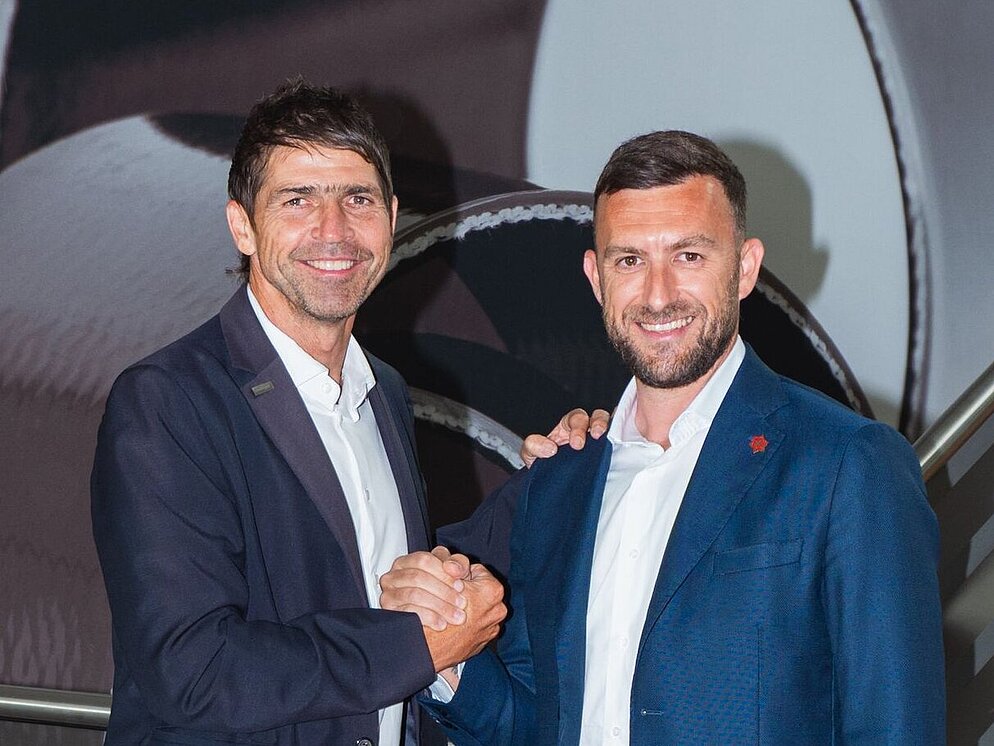
Werner Rädlinger and Arnold Cekodhima
The development of Primus Line® in Italy is reflected not only in market acceptance, but also in a series of technically demanding projects that set new benchmarks for trenchless rehabilitation.
References
Over the past 20 years, around 300 projects have been realised in Italy alone with various partners. Some of them have set remarkable precedents. Here is an excerpt of the shared track record:
First offshore project – Fuel off-loading pipeline
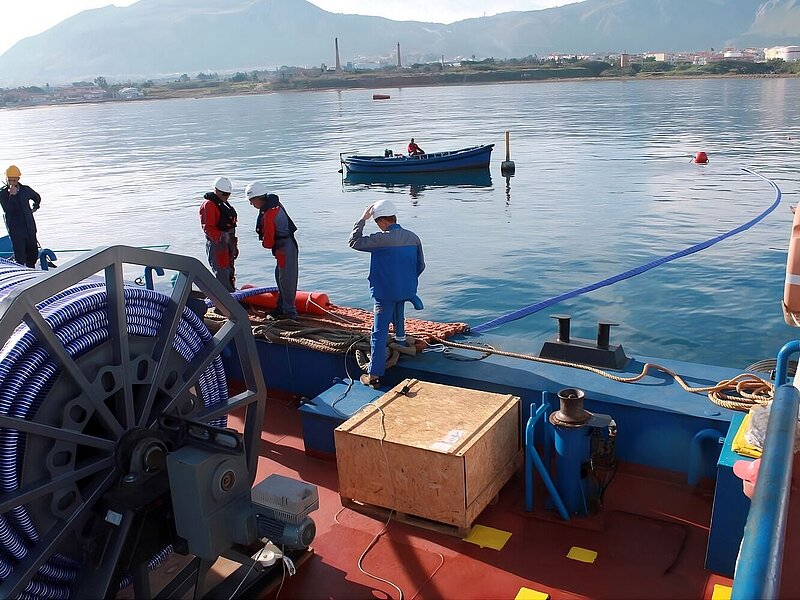
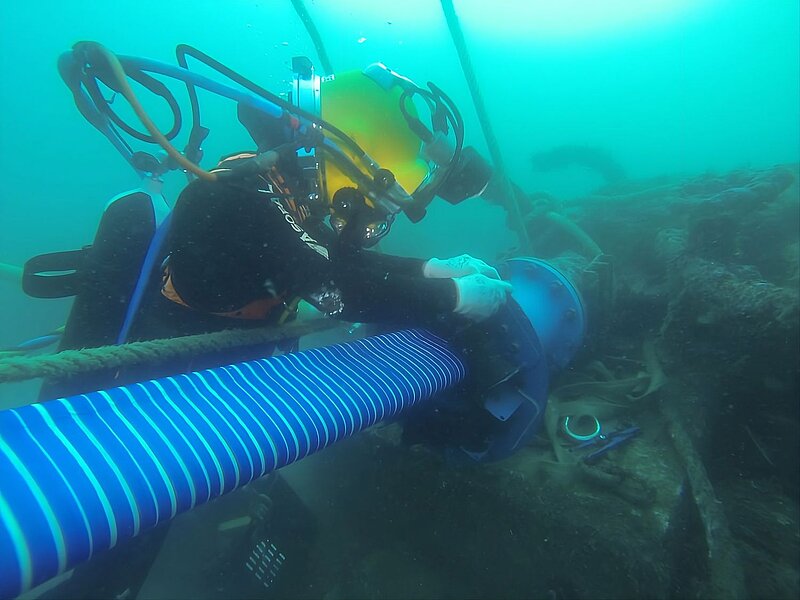
In 2013, Rädlinger Primus Line and its partner rehabilitated a subsea diesel pipeline, fifteen metres under the water surface. The 830-metre steel pipeline with welded pipe shots and an operating pressure of 10 bar connects a docking station in the Mediterranean Sea with an onshore diesel depot. The line operator undertook this preventive measure to address the ongoing corrosion process of the pipe which had been continuously exposed to salt water. The operator selected Primus Line® technology due to its pressure rating, its ability to negotiate bends and its short installation time. In this case the mere liner insertion process took only three hours. A notable aspect of this project was that the reel with the liner was positioned on a pontoon, and experienced divers inserted it into the host pipe.
Emergency drinking water bypass in Messina
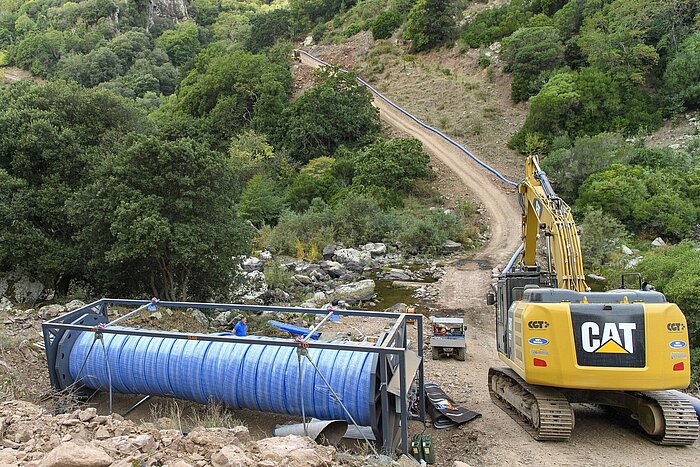
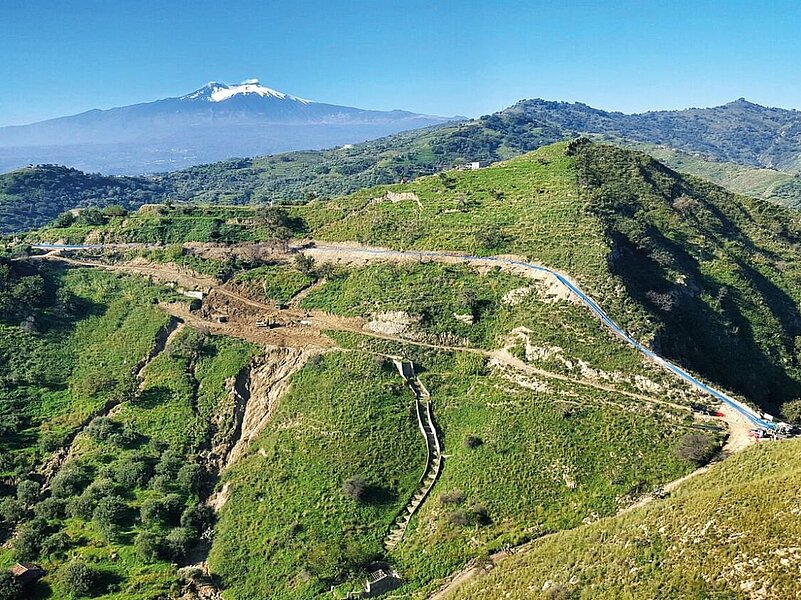
Heavy rainfall and a subsequent landslide in 2015 caused structural damage to a DN 1000 steel pipe. This trunk main supplies the city of Messina with drinking water. When the initial repair attempt failed, the city’s 240,000 inhabitants were left without drinking water for over ten days. The Italian government therefore declared a state of emergency, after which the military and civil defence took the lead. A local construction company was appointed to resolve the situation quickly and efficiently, and they suggested using the Primus Line® system to create a temporary bypass and restore the drinking water supply.
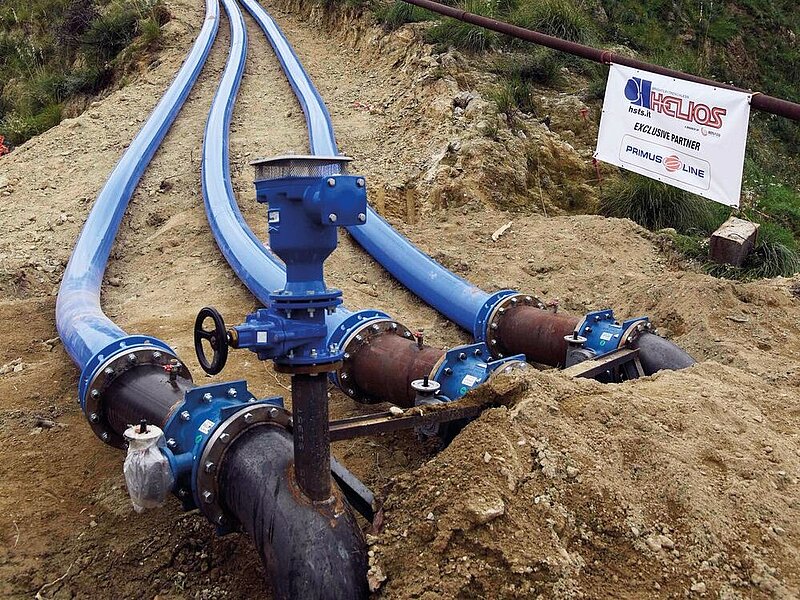
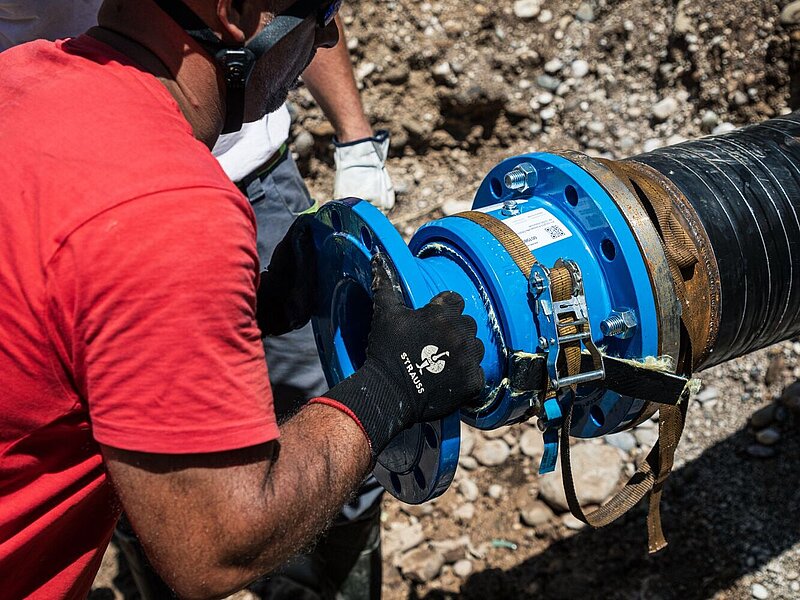
On the day the order was placed, three sections of DN 300 Primus Liner with lengths of 350 metres each, as well as six DN 300 Primus Line® connectors with flanges, left the manufacturer’s headquarters. Meanwhile, the local construction company built a site road up the back of a steep mountain to gain access to the damaged water main. A crawler excavator then transported the coiled Primus Line material to the construction site. Due to the 35-metre height difference between the connection points, the liner had to accommodate an operating pressure ranging from 3.5 to 7 bar. Additionally, the final 80 metres to the lower connection point required overcoming a 50% gradient. The three connectors were attached to the host pipe using a specially designed fitting.
Installation of the three sections was completed in just 30 hours. This emergency bypass delivered approximately 660 litres of drinking water per second to Messina – equivalent to 57 million litres per day.
3-in-1 solution designed for seismic conditions in Palermo
The Nuovo Scillato water main is one of Palermo’s and the coastal municipalities east of the city’s main drinking water conduits. Built in the 1980s to supplement and reinforce the old canal system, it transports water at a variable flow rate of between 500 and 1,000 litres per second from four springs, delivering an average annual volume of approximately 22 million cubic metres of water to users. The 62-kilometre-long conduit is made of DN 900 steel pipe. Repeated seismic activity had led to frequently and increasingly severe pipe damage, resulting in service interruptions. Danphix was asked to provide a quick provisional solution to help restore full operation.
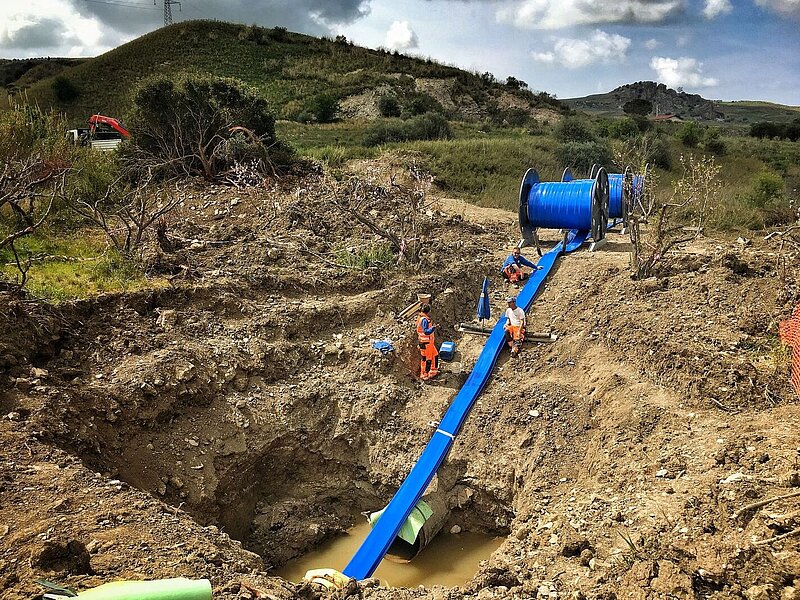
As this was a provisional repair project, the immediate goal was to convey at least 400 to 500 litres per second from the Scillato springs. This would allow the recovery of an annual volume of around 15 million cubic metres – approximately 15 to 20% of the volume used by the city of Palermo. The diameters of the Primus Line® system were chosen to suit the two repair sections, which had a total length of 1,700 metres. In the upper stretch, three Primus Liners DN 250 PN 30 were used; in the lower section, the diameter of the three liners was increased to Primus Line DN 300 PN 25 due to lower pressures.
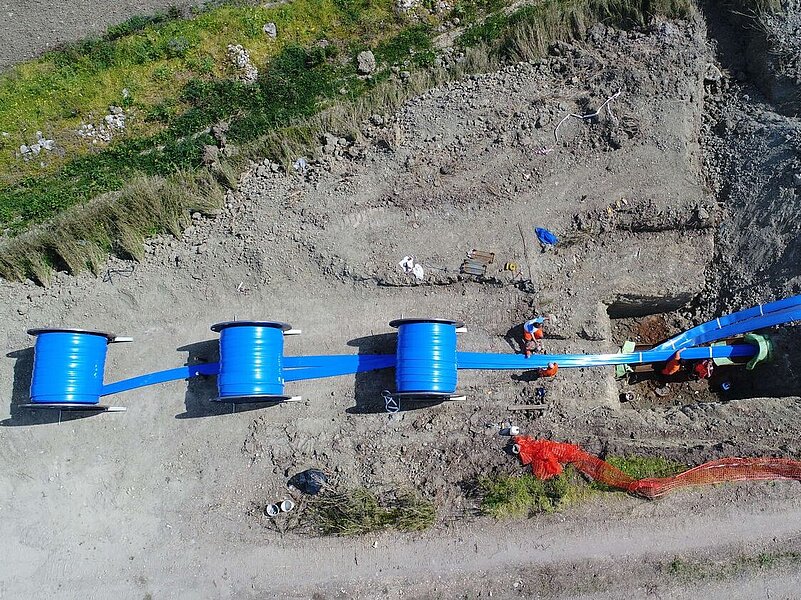
Three Primus Liners were inserted into each section in a single operation, with the three transport reels with the rolled-up liner positioned one after the other. Prior to insertion into the existing pipe, the liners were securely fastened to each other with tape to keep them in a uniform position along the entire length. Upon completion, this was the most significant rehabilitation project ever undertaken with trenchless technology in Italy from a hydraulic engineering perspective.
Longest single-pull installation in Italy – Flaibano trunk main
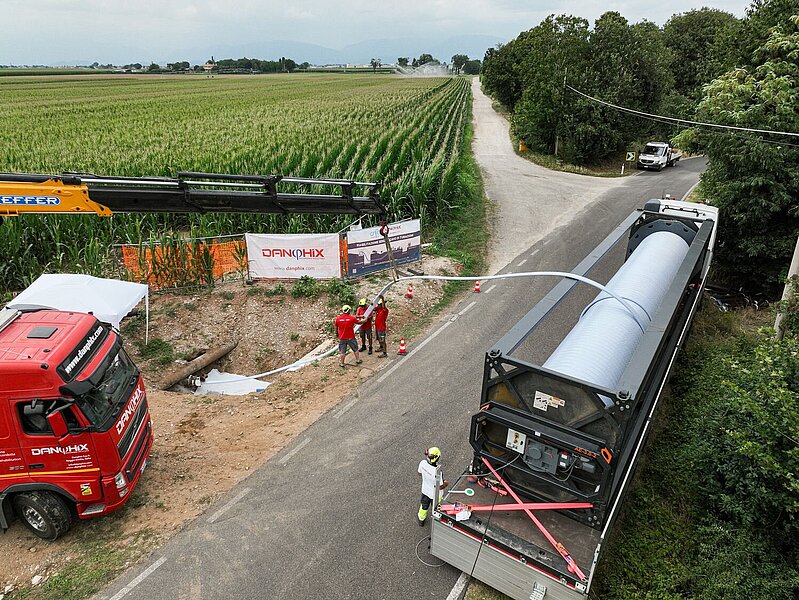
In 2025, Danphix rehabilitated a 2.4-kilometre section of a drinking water trunk main for the utility company CAFC S.p.A. in Flaibano, in the north-eastern Italian region of Friuli Venezia Giulia. The existing DN 225 asbestos-cement pipeline, which operates at 6 bar, runs mainly through open farmland and beneath local roads. The entire section was rehabilitated using Primus Line® SD 203 in one single, continuous pull.
With 2,461 metres inserted in a single operation, the project nearly reached the maximum continuous length that the liner can be supplied in one piece and demonstrated the system’s key advantage for long-distance trunk mains: the number of construction pits is governed by the installation length rather than the length of the pipeline. Only two pits were therefore required over the entire length, minimising disruption to farmland, local traffic and third-party services, and allowing the utility to restore supply within a much shorter outage window than a conventional open-cut replacement would have permitted.
Summary
The further development of the Primus Line® portfolio towards larger diameters and new products offers network operators cost-effective solutions. In terms of environmental protection, Rädlinger Primus Line also delivers products and projects that result in significant CO₂ savings during the rehabilitation process. The newly developed emergency connectors for network operators are unique and enable maintenance teams to repair the product quickly in the event of third-party damage.
Werner Rädlinger summarises his hopes for the future as follows: “Arnold and his team have gained extensive know-how in all areas, including drinking water, pressurised wastewater, and hydrocarbon pipelines. He has always been reliable and has acquired a great deal of experience from field operations around the world. Danphix is our partner for the most challenging projects. We will continue to walk the same path together because Arnold and his team share our vision.”
Two decades after the first Italian projects, Primus Line® has become the benchmark for trenchless pressure pipe rehabilitation in Italy – driven by technological reliability, challenging applications and a strong partnership built on trust.
Installation partner’s point of view
Behind many of these projects stands Danphix, the Italian installation partner whose expertise has helped Rädlinger Primus Line establish itself both in Italy and even internationally in demanding hydrocarbon pipeline projects. The two companies have completed more than 250 projects worldwide together to date.
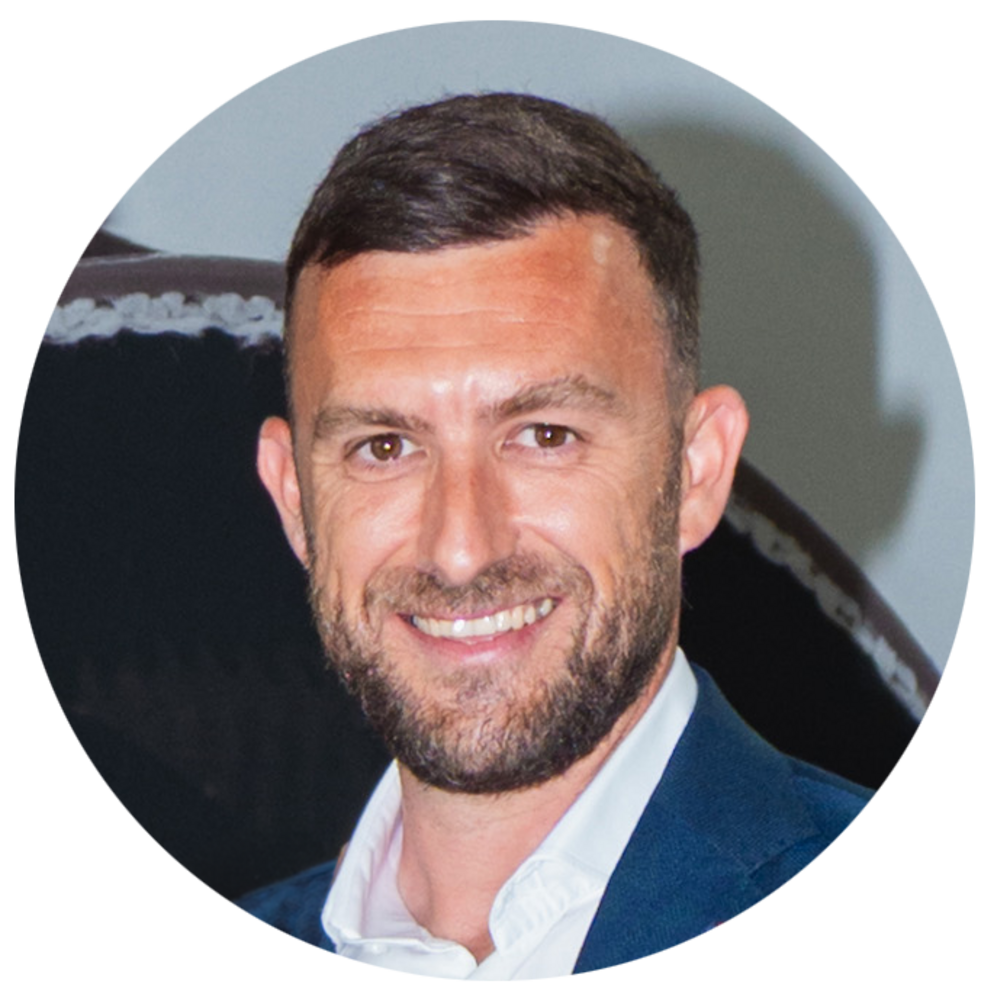
Arnold Cekodhima, a civil engineer, is the CEO of Danphix. He has 20 years’ experience executing trenchless pipeline rehabilitation projects. His work has taken him to over 20 countries across five continents, including such distant locations such as Fiji and the Cook Islands. Arnold is distinguished by his entrepreneurial spirit and his willingness to embrace challenges and develop further. It is these traits that have enabled him to push the limits of some Primus Line® applications.
In this interview, Arnold reflects on the cooperation, the market and the future of trenchless rehabilitation.
What was your first thought when you heard about Primus Line®? Where did you hear about it?
I first heard about Primus Line® in September 2006, when I started my career in pipeline rehabilitation with S3 Soncini S.p.A. My immediate impression was that of a young and innovative system that already conveyed a strong sense of reliability and long-term vision. Even at that time, it was clear that this technology was addressing a real gap in the market – particularly in an era when CIPP solutions for pressurised pipelines were simply not viable.
How did the collaboration come about?
The first relationship with Rädlinger Primus Line developed naturally through the existing cooperation between the company and S3 Soncini, which was then the industrial reference in the Italian market.
As a young engineering student working while completing my degree, I gradually supported the early projects, gaining hands-on experience with the technology and its applications. Growing professionally alongside the system itself allowed me to contribute to pushing its use toward increasingly complex and demanding scenarios. As always, practice builds experience – and experience drives technological evolution.
Do you remember your first meeting with Werner Rädlinger [the owner and Managing Director of Rädlinger Primus Line]? What is particularly on your mind?
I clearly remember listening much more than speaking – I was only 19 years old. Rädlinger Primus Line was a very different company compared to today, but its ambition was already unmistakable: to create a market by redefining how pressurised pipelines could be rehabilitated. Great credit goes to Werner for believing in this vision early on and for leading Primus Line® to become the undisputed benchmark in this sector.
What excites you about the product?
What excites me most is how Primus Line® fundamentally changes risk management during installation.
Being a fully manufactured product, it significantly reduces the number of uncontrollable variables on site. Unlike many other trenchless technologies – particularly those relying on in-situ chemical or physical transformations –, Primus Line® is not dependent on weather conditions, temperature or curing processes performed in the field.
This allows contractors to focus their energy where it truly matters: on engineering, planning and execution. As project complexity increases– especially in oil & gas and long-distance water applications –, this shift from reactive site management to proactive engineering becomes a decisive advantage.
Looking back over the last two decades: What has – in your perception – changed in reference to sales, customer awareness and/or competitors? What challenges lie ahead?
Rädlinger Primus Line was a true pioneer. They did not simply enter a market – they created one.
In the early years, if a project existed, the Primus Line® technology was often the only viable solution. The challenge then was limited market volume and low customer awareness.
Today, the situation is completely different. In Italy, Primus Line® is the most widely adopted technology for trenchless rehabilitation of pressurised pipelines. In many cases, “flexible relining” is directly associated with Primus Line® itself, to the point that the name is often used to describe the solution rather than the brand behind it.
Success and increasing volumes have inevitably attracted competitors, particularly from Asia. While quality and manufacturing processes still set Primus Line® apart, continuous investment in research and development is essential to remain the reference – not only in volumes, but in innovation.
At the same time, alternative technologies such as advanced CIPP systems and HDPE swage lining have evolved significantly. In pipeline rehabilitation there is no perfect solution – only the right one for the right problem. If Rädlinger Primus Line continue with their same pioneering mindset that shaped their origins, they will remain closer than anyone else to that ideal balance.
Since you travel a lot, even to very remote places: How important is intercultural competence?
It is fundamental. You need an open mind, a clear vision and strong discipline. Working in different countries and remote locations enriches both professional and personal experience. At the same time, it requires the ability to integrate into local cultures without compromising technical standards.
You must always remember that you are a guest in another country. Respect, adaptability and solid technical principles are the foundation of every successful international project.
What was the very first common project?
The first project I worked on with Rädlinger Primus Line was the rehabilitation of a DN500 pressurised sewer in Orbetello, Italy. It was a complex and high-volume project from the very beginning: several kilometres of pressurised network rehabilitated between 2006 and 2009. Those pipelines are still in operation today, which remains the best possible validation of the technology.
Do you have a favourite project?
Every project leaves something behind – technically and humanly. Some are difficult, others straightforward; some appear impossible at first and later become important milestones.
If I had to choose, my favourite project is always the next one because that is where improvement truly begins.
What is your special whish for the future cooperation?
Another 20 years of innovation, higher benchmarks and new challenges. The real challenge is not staying on top, but staying relevant. To achieve this, the Primus Line family must remain united, supporting one another because reaching a milestone is never an individual victory, but always a shared success.
Is there anything else you would like to mention?
The true value of long-term cooperation is not only measured in metres installed, but in trust built, experience shared and knowledge transferred. Those are the elements that shape lasting partnerships.
Inspired and inspiring answers. Thank you for your insights, Arnold!
Stay up to date with Primus Line: Subscribe to our newsletter now!
Information about sending newsletters with the provider CleverReach, evaluation, and your unsubscribe options can be found in our privacy policy.